Biography
About Michael Anthony Rose
The body of work crafted by Michael Anthony Rose is fundamentally preoccupied with the collapse of the artificial. Throughout his catalog, he examines the elaborate structures people build to protect themselves, whether those are the suffocating blueprints of traditional masculinity, the polite compromises of a failing marriage, or the grand, terrifying machinations of an authoritarian state. He is a songwriter obsessed with the moment the master plan fails and a person is left holding the leftover pieces. Rather than offering easy comfort, his music investigates what it means to stand inside the ruins of a life and slowly learn to claim it as one's own.
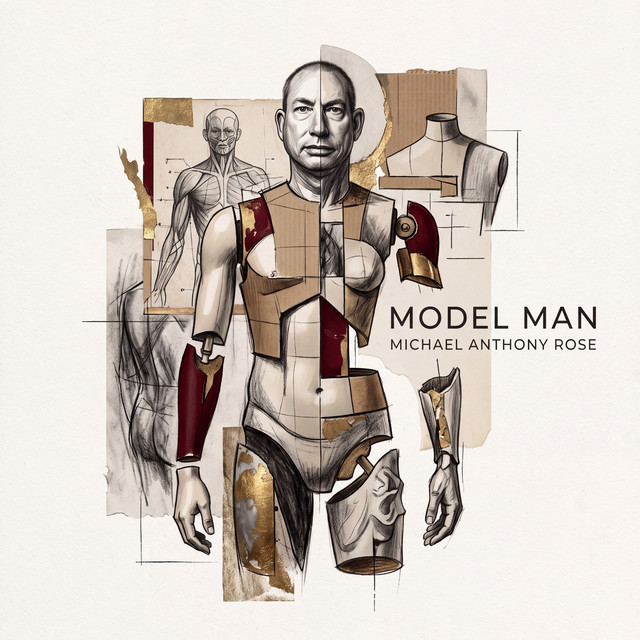
These recurring subjects manifest in deeply tangible ways, often contrasting the intimate decay of the individual with the sprawling corruption of society. Rose frequently writes about the quiet betrayals of the physical body, capturing the precise moment when a person realizes they are no longer the protagonist of the youth-obsessed culture around them. This personal disillusionment is mirrored in his sweeping explorations of political theater, where power is bought, truth is manufactured, and ordinary citizens are manipulated into silent obedience. By placing domestic estrangement right next to civic tragedy, he illustrates how the demand to be a perfect model ultimately erodes the human spirit from both the inside and the outside.
To build these worlds, Rose relies on a voice that is both unsparingly direct and richly cinematic. His craft is rooted in the physical details of everyday life, using objects like a chipped coffee mug, a forgotten house key, or a useless metal tool to anchor abstract anxieties in concrete reality. The architecture of his songs often shifts perspectives, moving from a weary, conversational baritone recounting a personal failure to a multi-voiced, theatrical chorus echoing the demands of an unnamed authority. This structural agility allows a single track to morph from a quiet acoustic reflection into a dense, sprawling narrative without losing its emotional center.
Engaging with this music requires a listener to sit with discomfort, asking them to confront their own fading illusions and unspoken regrets. It is not background music for an easy afternoon, but rather a demanding, lyrical journey that expects close attention to its shifting characters and dark humor. For those willing to invest the time, the reward is a profound sense of solidarity. Rose provides a rare space where the grief of losing one's youthful certainty is acknowledged, offering the listener a hard-fought, grounded peace that only arrives after the last false promise has been stripped away.


 album
album